01
Google devalues low-quality links
Link spam updates and SpamBrain quietly filter the junk. Most cheap legal-directory and guest-post links never hurt you. They simply do nothing, which means you paid for a placebo.
Payment received
Your setup fee has been charged and your first monthly payment is one month from today. I check every order by hand within two working days. If your town is already taken for your trade, you get a full refund or a place at the front of the queue, whichever you prefer.
Your receipt is on its way by email. Reply to it any time and it reaches me directly.
I restore real local business websites, establish each with a Google Business Profile, and add a homepage link to your firm with copy built around your practice and your city. Branded anchors, hyper local relevance, one law firm per site: never a directory, never a marketplace.
You already know most of this. It is worth saying plainly, because the failures are what the service is built around.
Link spam updates and SpamBrain quietly filter the junk. Most cheap legal-directory and guest-post links never hurt you. They simply do nothing, which means you paid for a placebo.
Guest post marketplaces sell general-topic sites that link out to casinos, CBD and payday loans from the same sidebar next to your firm. They look like spam because they are, and they get devalued in bulk.
A link from a generic lifestyle blog in another country says nothing about your personal injury or family law practice in Austin. Relevance is the signal, and most paid legal backlinks carry none of it.
Real publishers know exactly what a link is worth. Prices climb every year for a single placement, on their terms, with a rel attribute attached if their lawyer is having a bad day.
Sponsor the local sports team and you get a logo on a wall beside ten other businesses: an outbound image link with no anchor text, no context and no exclusivity.

Every option trades away at least one of relevance, control, exclusivity or believability. The fix is a link source where you hold all four.
I source expired and dropped local business domains in and around your city, restore them as legitimate local business websites, and establish each with a Google Business Profile. The homepage itself is then written around your firm, so the link sits in copy that is genuinely about your practice and where you practise it.
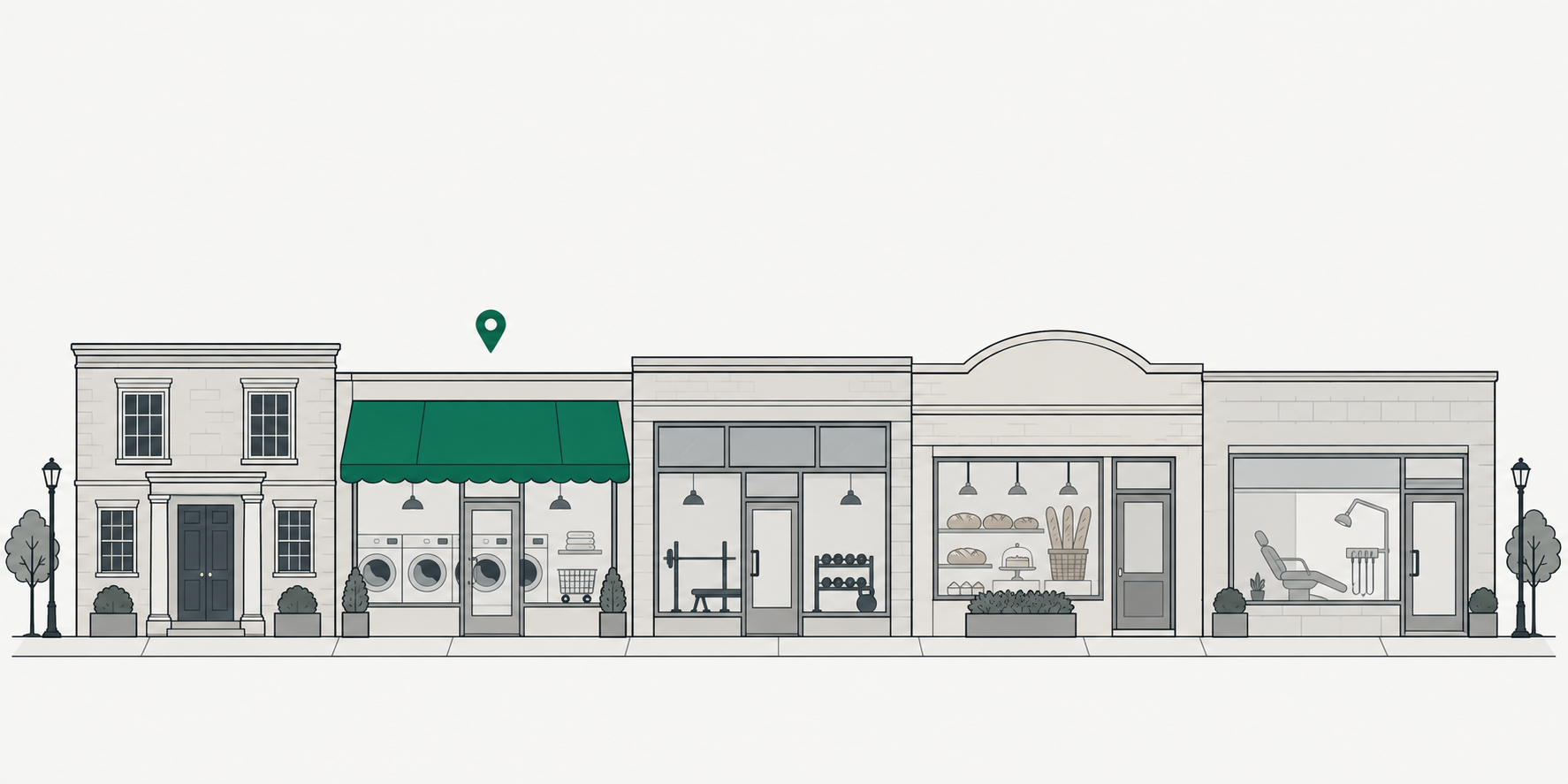
Two placements in the shape they actually take. The highlighted phrase is the client link, anchored on the firm name.
This year's spring league is proudly supported by Harmon & Reyes Injury Lawyers, who covered new equipment for all four of our U-12 teams. Their team has backed youth sport in the Westlake area for three seasons running.
For anything past a stern letter, we hand it to Coulter Estate & Real Estate Law. They have walked us through three eviction filings this year and always explain the timeline before we agree to anything.
You tell me the business and the city. I handle sourcing, restoration, hosting, GMB, the copy and the upkeep.

Choose how many local network sites you want pointing at your business, or your client's.
I register expired local business domains with clean history in your city and rebuild them as working local sites.
Each site gets a Google Business Profile, then its homepage is written with context around your business and your city, and links to you on a branded anchor.
Every site keeps publishing: two new posts and two podcast episodes a month, and heavier than that early on while each service gets an episode of its own. Power-ups are part of the same monthly fee, continually building each site's strength so that strength passes through to you, instead of the links decaying.
The build is month one. After that the network keeps compounding, one site at a time, for as long as you rent it.
Every site in your package at once: domains sourced in your city, restored as working local business websites, a Google Business Profile established on each, and 300 local citations per site. Your link goes live on a site once that site is indexed under its own brand name, not before.
A press release announcing your involvement with the first business in your network. A sponsorship, or a signed supply agreement: a 12 month contract as its new air duct cleaners, for example. It carries podcast links alongside it, and on Growth and Dominate your supporting post for the month runs on that business's site. The release is force indexed, not left to be found.
The release links to your site by default. Tell me if you would rather it carried a brand mention with no link.
A release for the second business in your network. At the same time, the previous release gets tier two links pointed at it, so the release page itself gains strength rather than being published and left alone. A link on a page nobody has strengthened is worth a fraction of one on a page that has been.
A new release for the next business in turn, with its podcast links, and tier two pointed at the release before it. The rotation works through every site you are renting, so each one ends up with a release of its own and each release ends up strengthened.
Cadence follows the tier: Starter every other month, Growth monthly, Dominate twice a month. A full rotation therefore takes about ten, eight and seven months, so no tier waits materially longer than another for its network to come round.
Every site has its release, and every release has been strengthened. From there I keep powering the network up using my own methods, which I develop and change as the results tell me to. That is the part I do not publish, and it carries on for as long as you rent the network.
Two posts and two podcast episodes per site per month, heavier early on while each service gets an episode of its own, and they are syndicated, linked and force indexed rather than only published. That is a power-up on every site every month, and it does not pause while the release rotation runs. It is what keeps the sites getting crawled, and it is in the same monthly fee.
You are not buying from an agency with a sourcing team in one country and a writing team in another. I do the whole build myself, which is the only reason I can stand behind how these sites read.
It also means you talk to the person doing the work. No account manager relaying questions, no ticket queue, and an honest answer when a market is too thin to build in.
Because of that, I take on a limited number of networks at a time. If your market is full I will tell you rather than sell you a worse version of this.
Monthly rental, scoped per target business. Networks are never shared between clients.
The first month covers restoration, Google Business Profile and 300 citations per site.
The first month covers restoration, Google Business Profile and 300 citations per site.
The first month covers restoration, Google Business Profile and 300 citations per site.
Within two working days of signing up I tell you whether the domains for your market are there. If they are not, you choose: hold a dated place on the waitlist, or take a full refund. I will not pad your network with a domain from the wrong city to keep your money, because the relevance is the entire product. Prefer to check before paying? Ask first and I will look, at no charge.
Prices in USD. Month one is higher because of the work to set the sites up, and it is charged instead of your first monthly fee rather than on top of it. No minimum term: cancel any time and the placement comes down, after which the site can be re-let, including to a competitor in your market. Market-level exclusivity and extra power-ups are quoted separately.
Still unclear on something? Ask me directly and I will answer it myself, whether or not you ever buy.
If you are going by Moz DA or Ahrefs DR, then little to none. The quality of a link has changed over the years, and authority is not a metric professionals use anymore, especially in the local business space. Top agencies and lead generation companies care about content and geographic relevance, and that is exactly what I provide. Some of the sites also carry strong local citations, and power-ups strengthen them further.
In mechanism, yes. I own the sites that link to you. In execution it is the opposite of what people picture when they hear the word: a pile of expired domains on one host, running the same template, cross-linking each other and selling links to anyone who pays. These are restored local business websites in your market, each with its own Google Business Profile, each linking out to one client, with no links between them. The label matters less than what somebody would find if they went looking.
Nobody can promise you what Google will do, and anyone who does is selling you something. What I can tell you is where the risk actually sits. It is not the link itself, it is the footprint: a network that obviously resolves back to one operator. That is the part I control and the part you are paying me to get right. What lands on your site is a branded mention inside relevant local copy, which is what it looks like when a real supplier or sponsor gets named. If one of these sites were ever devalued, the link stops counting. It does not hand your site a penalty.
Different registrars and different hosting and CDN providers, so the network does not trace back to one account or one IP range. The sites never link to each other, and each one is sourced, built and written separately instead of stamped out of a template. At the scale I work at, one client per site and a handful of sites per market, that much separation is honestly overkill. I do it anyway, because it costs me time rather than costing you anything.
Yes, and they are force indexed rather than left to be found on their own. Not just the sites either: every post, every podcast episode and every press release is force indexed as it goes out. A link sitting on a page Google has not indexed is worth nothing to you, so indexation is part of the delivery rather than something you hope happens later.
I watch for it. If a site drops, I work on getting it reindexed, and if it is still out after 30 days I replace it with another site in your market so your link count is never quietly down.
Marketplace links come from general-topic sites that sell to anyone and link to everyone, with no local relevance. My sites are restored local businesses in your market, with a GMB presence, and each links out to exactly one client.
Do that as well, because it is good marketing. As a link it is a logo on a wall beside a dozen sponsors, usually an image link with no anchor or context. Here you get a written mention, in copy about your service, and no other business on the page.
They are built from expired local business domains with real history, restored as functioning websites with a Google Business Profile. The mention reads the way local businesses actually talk about each other: a laundromat crediting its vent cleaner, an academy thanking a sponsor.
Yes. Plain editorial links in the body copy, with no sponsored or nofollow attribute, and never parked in a sidebar or a footer where nobody would put a genuine recommendation.
I write an editorial mention of your firm on a genuinely local site, in the same shape as any other local business crediting a supplier or a sponsor. It carries no payment structure between your firm and the person mentioning you, and no case referral is implied. That said, advertising and referral rules differ by state and bar association, and I am not your lawyer: check your own jurisdiction's rules before running any link building, mine or anyone else's.
Yes, though branded is the default for the reason above. If you would rather the anchor read as a practice area, such as personal injury lawyer in Austin, tell me and I will use it on some or all of the links. I will flag it if the split you want looks over-optimised for a firm your size, because that is the part that actually carries risk.
Your brand name, unless you tell me otherwise. Branded anchors carry no over-optimisation risk, and the relevance comes from the copy around the link instead of from stuffing a keyword into it. If you want exact match or partial match on a specific placement, just say so and I will use it.
Yes. A homepage link makes the most sense for most local businesses, so that is the default, but service pages and location pages both work, usually placed in a blog post on the network site rather than on its front page. Send me the target URL you want for each placement.
Yes, and this is the part most link sources skip. Every site publishes two new posts and two podcast episodes a month, so it keeps getting crawled. The early months run heavier, because each service the site offers gets an episode of its own before the rotation settles into its steady rhythm. A site that stopped updating the day your link appeared is a site Google has stopped paying attention to.
Included in your monthly fee, not an add-on. The work happens on the network site itself rather than directly on you, and it targets local grid rankings and real visitors rather than link equity alone, so the site keeps getting stronger and that strength passes through to you via the link. Two kinds run in parallel. Every site is powered up every month through its posts and podcast episodes, which are syndicated and linked rather than just published. On top of that, a press release goes out for one business in your network at a time, and each release is then strengthened with tier two links, working through your network site by site. The rotation runs every other month on Starter, monthly on Growth and twice a month on Dominate. Once it has been all the way through, I keep going with my own methods. The method varies on purpose: what lifts a local site changes, and I would rather adapt than commit to a tactic in writing and keep doing it after it stops working.
A post on one of your network sites that points at a page you choose. It is worth separating from the two posts every site already gets each month: those are written for that local business and exist to keep the site real and crawled, and they do not link to you. A supporting post is the opposite way round. It is written for you, and you pick the target.
Your main placement is a branded link, usually to your homepage. That is the safe default, but it is rarely where you actually need movement. If the page you want ranking is air duct cleaning in one suburb, a homepage link helps it only indirectly. A supporting post lets you aim straight at that service or location page, with an anchor that suits it, while your main link stays untouched.
Starter does not include them. Growth includes one a month and Dominate two, inside the same monthly fee. Each one runs on the site coming through the release rotation that month, so it sits on the site being worked on rather than a dormant one. Send me the target URL and what you want it to support, or leave it to me and I will aim at whatever looks weakest.
Because more would work against you twice over. A network blog that fills up with one client's niche stops reading like a local business, and that footprint is the thing I protect hardest. The second reason is plainer: after the first link from a domain, further links from that same domain are worth much less than people expect. Two well-placed posts beat ten, and I would rather sell you the number that works than the number that sounds generous.
Seven to fourteen days, depending on how many sites your package includes. Part of that wait is deliberate: I do not add your link until the site is indexed under its own brand name. A link on a page Google has not accepted as a real site yet does nothing for you, so the wait buys you a placement that counts from the day it appears.
A monthly rental. You are renting a placement on a site I own, maintain and keep publishing, and your link stays live for as long as the subscription runs. That is also what funds the upkeep: the sites keep publishing posts and podcast episodes instead of being built once and left to rot.
The link comes down and the site returns to the pool, which means it can later be rented by someone else in your market, including a competitor. You are renting the placement, not buying it. I would rather be straight about that up front than make an easy sale: if what you want is a link you keep forever regardless of whether anyone is still maintaining the site it sits on, this is not the right service.
One client per site for as long as you rent it. No second business on the page, no logo wall, no sharing. If you stop renting, the placement comes down and the site goes back into the pool, which can include a competitor in your market. That is the honest trade for month-to-month with nothing to sign. If you want exclusivity at market level, so nobody in your niche and city appears anywhere in the network, ask and I will price it for your market.
Yes. Agencies are the core customer. Each package is scoped per target business, and no network is ever shared between two clients.
I do, and that is the point. Registration, restoration, hosting, GMB, the copy and the upkeep all sit with me, so there is no footprint back to you and nothing to maintain on your side.
No. The network is mine end to end: the sourcing, the restoration, the Google Business Profile setup and the content around your link. Nothing is handed to a content mill or a VA, which is the whole reason the sites read like real local businesses instead of generic filler.
No. Nothing to install, no plugin, no logins, no changes on your side. All I need is the target URL and the brand name for the anchor. For agencies that means nothing to explain to the client and nothing to unpick later.
Yes. Once your placements are live you get the list, so you can see exactly what you are paying for and read the copy around your link.
I keep sourcing. If nothing suitable has dropped in your market yet, I tell you where you stand rather than padding the network with a domain from the wrong city. If you have already paid, that is your call to make, not mine: hold a dated place on the waitlist, or take a full refund. You find out within two working days, not after a month of silence. It is slower than promising everyone a network, and it is the reason the relevance holds up.
Local businesses only: trades, home services, clinics, practices, studios and the like, which is exactly where a law firm sits. A firm with a genuine local presence and a real practice area is a straightforward fit. Not national ecommerce, not affiliate sites, not anything where a mention from a local business would make no sense. If your firm is not local, the whole premise stops working and I will tell you so.
No, and I would be careful with anyone who does. Links are one input out of many. Where you actually land also depends on how competitive your trade and your city are, how well your own pages are built and written, your Google Business Profile and reviews, how fast your site is, and what your competitors are doing in the meantime. I control one of those inputs and I would rather be straight about which. What I do guarantee is the work: the sites, the profiles, the citations, the publishing cadence and the placement, delivered as described, and that is set out in the terms. If links are the piece you are missing, this is the part that moves. If your on-page is broken, or you are aiming at a market you are not ready to compete in yet, links will not rescue that, and I will say so before you pay rather than after.
Tell me your practice area, your market and the package size. I come back with a sourcing plan for your local network, usually within two working days.
Rather talk than type? Message me on WhatsApp and you will get me, not a queue.
What do you want to know? Pick one and finish the sentence, or write your own.
Adding your trade and town gets you a straight answer first time. Prefer email? hello@localpbnbuilder.com